
Voice, chat and email: why three systems are a risk
Compliance fails at the seams. A single governed archive is what makes a compliance project achievable.
Read article →Platform
Storing communications is only the starting point. What an archive must be able to demonstrate, and a six-stage test to check it.
 By Pedro Berkeley CotterProduct and compliance
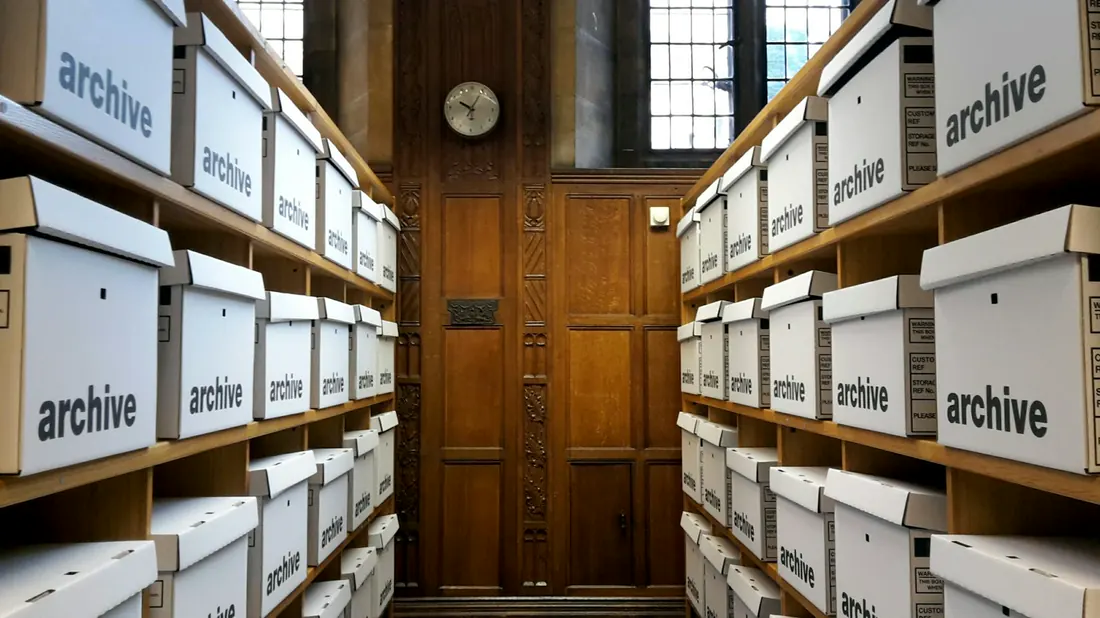
Storing communications is only the starting point. Compliance requires being able to identify, protect, retrieve and contextualise the records an organisation is obliged to keep.
When an organisation has to respond to an audit, the question is rarely just whether a recording exists. It is whether it can identify the right communication, confirm that it is complete, explain who accessed it and make it available in the appropriate context and timeframe. A file stored without metadata, access rules or an operations history may exist and still be hard to use as evidence.
A compliance archive should be understood as a set of processes, responsibilities and technology controls. The platform is an important part of that set, but it does not replace internal policies, record classification, retention decisions or oversight. The ability to prove depends on how these dimensions work together.
A useful approach starts by turning the question around: instead of asking «where do we store our communications?», ask «what will we need to be able to demonstrate when someone requests a record?». That is also where an inspection begins, as shown by the seven questions an auditor asks first. This shift brings the design of the archive closer to the needs of Compliance, IT, Security, Legal and Operations.
MiFID II and its supplementing regulation set specific recording and retention requirements for certain communications relating to investment services and activities. The scope depends on the entity, the activity and the nature of the communication. It is not correct to conclude that all of an organisation’s calls, messages or meetings are covered in the same way.
The DORA Regulation, applicable since 17 January 2025 to the financial entities in scope, governs ICT risk management and digital operational resilience. It is not a general rule requiring all communications to be recorded. Its relevance to the archive arises, among other things, when the capture and retention systems are ICT services whose availability, recovery and dependency management need to be considered.
The GDPR adds cross-cutting requirements for the processing of personal data: lawful basis, purpose limitation, data minimisation, security, transparency and storage limitation. An archive designed to preserve evidence must be able to reconcile legitimate retention needs with rules on access, erasure and the exercise of rights, where applicable.
These instruments are not interchangeable. The work begins by mapping which of them apply, to which data and on what basis. Only then can obligations be translated into verifiable operational requirements.
A control matrix prevents the project from being reduced to a list of legal texts. For each category of record, it is worth following the path the record takes: how it is captured, what context accompanies it, how it is protected, who can access it, how long it is kept and how it is made available. The table below gives examples of questions to document at each stage, not a universal list of legal obligations.
| Stage | Control to define | Evidence to verify |
|---|---|---|
| Capture | Inventory of channels and capture rules | Coverage, exceptions and capture tests |
| Contextualise | Mandatory metadata per record category | Records searchable by customer, employee, channel and date |
| Protect | Protection against alteration, and verification | Operation logs and verifications |
| Control access | Role-based permissions and authorisation | History of queries and exports |
| Retain | Policy per category and legal basis | Configuration, review and deletion |
| Retrieve | Search and export procedure | Documented request, authorisation and delivery |
In practice, the matrix should have one owner for defining each requirement and another for carrying it out. Compliance and Legal frame obligations and purposes; IT and Security implement and monitor the controls; Operations ensures that communication flows are actually captured. The specific responsibilities vary between organisations.
A failure at source is not fixed by robust storage. If a relevant channel is not included in the capture process, or if a system change interrupts collection, the archive may become incomplete without the organisation noticing. The inventory of sources must therefore keep pace with the channels teams actually use, and the risk grows when voice, chat and email live in separate systems.
Metadata gives a recording its context. Customer, process, employee, channel, date, time and event identifiers, where appropriate and legally justifiable, make it possible to link an interaction to the business process. Without this layer, searching depends on file names or manual procedures, with a greater risk of error.
The log of access and operations must be tamper-proof: no user, including administrators, can edit or delete it. That is what makes it possible to answer, beyond doubt, who accessed a record, when and why. The article Tamper-proof audit trail details what this requires in practice.
But the value of a record as evidence depends on more than one mechanism. Protection against alteration, integrity checks, access control and the audit trail itself add up, and each has its limits and assumptions. The organisation should know what evidence it produces and how it verifies it.
There is no single retention period valid for all communications. MiFID II, for example, sets five years for the communications in scope, extendable to seven at the request of the competent authority; other categories follow other rules. The policy should identify, for each data set, the legal basis, the purpose, when the period starts and what happens to the data when it ends.
Where there is litigation or an investigation, certain records may need to be preserved beyond the period; that decision should be documented and subject to control. Deletion is also a compliance process: it must leave a record and take copies and exports into account. The article Retention vs. erasure explains how to reconcile keeping and deleting.
Imagine an audit request concerning a customer interaction within a given period. The team needs to locate the record, confirm the channel, link it to the right process and demonstrate who viewed or exported the information. If each step depends on a different team and on manual searches, the response becomes slow and hard to reproduce.
A mature operation defines in advance who can request a record, who authorises access, what the search criteria are and how the release is recorded. The history of access and exports should be consistent with the permissions model and with the purpose of the processing.
The time needed to locate evidence, the rate of completed requests and capture exceptions are useful operational indicators. And retrieval also depends on the archive being available when it is needed: that is where the RPO and RTO that DORA calls for come in.
Before changing technology, choose a category of record, for example the calls of a trading floor, and follow a real record from the moment it is created until it is delivered. At each stage, the answer should be documented, with the evidence and the person responsible.
If any answer depends on one person’s informal knowledge, you have found a weakness before an auditor does. The aim is not to pile up procedures: it is to make the archive auditable, operational and consistent.
A compliance archive platform supports each of the six stages: it centralises records, organises them by metadata, applies permissions, protects the history and makes retrieval easier. Its effectiveness, however, depends on the design of the solution, the sources actually integrated and the policies configured for each organisation.
uPlayback brings voice, chat and email together in a single archive, searchable by business metadata. Every access is logged in a tamper-proof audit trail, retention is applied by rule to each category, and every export goes through request and approval. Each installation is dedicated to a single customer, under European jurisdiction.
An archive ready to respond is not the one that stores the most data. It is the one that can demonstrate, in a controlled way, why each record exists, how it was protected and how it can be retrieved.
No. The scope of the obligations depends on the activities and communications covered by the applicable regime. The organisation should identify the relevant flows and confirm the framework with its Compliance function.
No. DORA mainly governs digital operational resilience and ICT risk management for the entities in scope. Retention periods for communications are determined by the specific rules that apply to each record.
It is a necessary condition, but not a sufficient one. Without a tamper-proof access log, the recording is open to doubt. With one, its evidential weight still depends on the context, the integrity mechanisms, the origin of the record and the applicable rules.
The functions responsible for the legal and regulatory framework, with implementation and monitoring by the technical and operational teams.
An effective archive policy starts by identifying the applicable obligations and checking whether existing controls make it possible to demonstrate compliance. Talk to the uPlayback team and assess your organisation’s needs.
Published by the uPlayback team, a Grupês product. Three decades of experience in compliance recording.
Continue reading
Compliance, integrations and deployment answered live, with your questions on the table and no generic pitch.