The three places the data can live
The choice is not technical, it is legal. It defines which law your data answers to, and who, ultimately, can demand it. Each scenario has different consequences, and none is universally better: the best one is the one that matches the control you want to keep.
The client's jurisdiction
On-premises
On the client's own servers. Full control; running the infrastructure stays in-house.
European Union
European private cloud
Dedicated infrastructure, under EU jurisdiction, run by a European provider. Sovereignty without running servers.
Portugal
Sovereign national cloud
The data stays on Portuguese territory and under Portuguese jurisdiction, with no exposure to the laws of third countries.
Why having the server in Europe is not enough
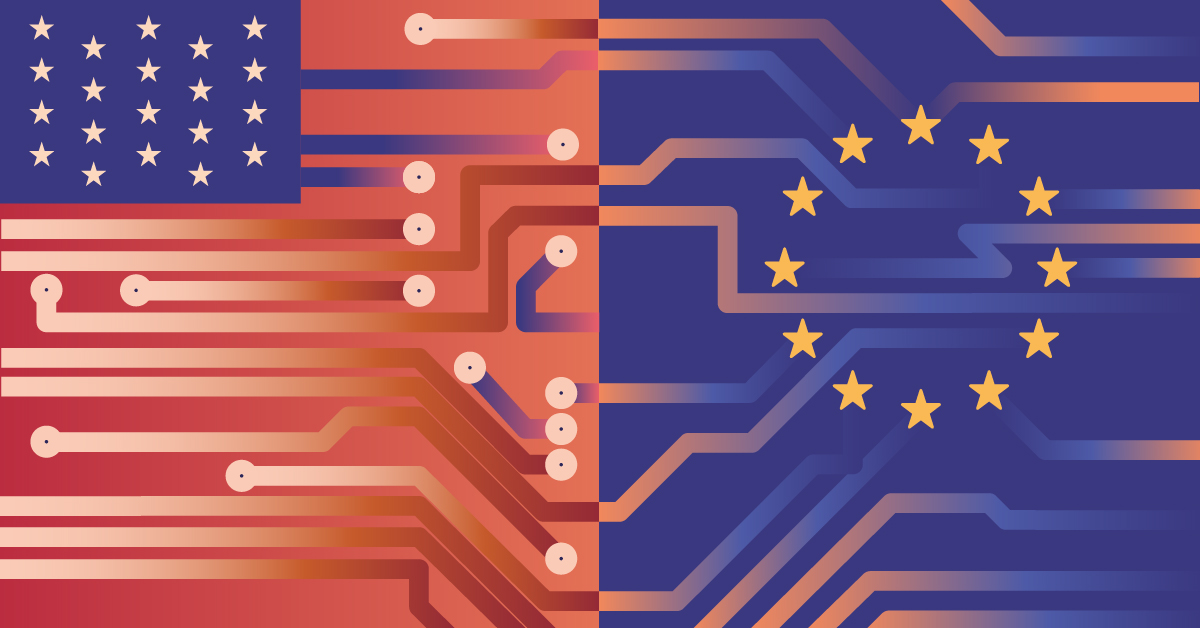
The US CLOUD Act of 2018 allows US authorities to demand data from a provider subject to American jurisdiction, regardless of whether the server sits in Lisbon, Frankfurt or Dublin. The physical location of the disk does not decide jurisdiction; the nationality and structure of the provider does.
This is why digital sovereignty is not «data in Europe»: it is data staying under European jurisdiction, with a provider that cannot be compelled by a foreign law. The distinction looks subtle, but it is the difference between data that answers to Portuguese law and data that, in theory, can be handed to a foreign authority without your organisation even knowing.
How uPlayback integrates with what you already have
The archive does not replace your recording, identity or ticketing systems. It integrates with them: it imports from the voice, chat and email sources you already have, and connects to your identity management (AD / LDAP / Azure AD) so that access follows your own rules. A single integration point, encrypted at rest and in transit.
Encryption, access and certification
Data is encrypted at rest and in transit. Access is profile-based, inherited from your identity management, and every access leaves a trail in the audit trail. ISO 27001 certification is under way; until it is issued we do not present it as complete, but the controls it requires are implemented as standard.
What happens if the main system fails
This is DORA's question. The archive is designed for an RTO and an RPO defined with you: how long it may be unavailable and how much data may be lost. Replicas and copies ensure that a failure of the main system is not a loss of access to the history, and that recovery happens within the agreed window, not «when possible».